


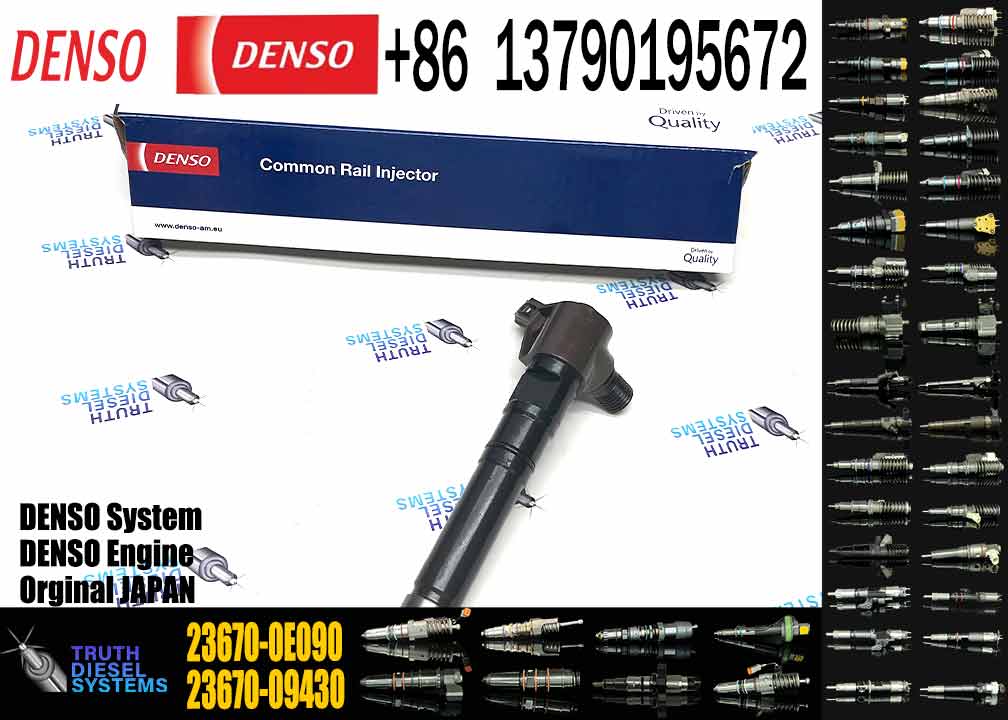
DIESEL injector 23670-0E090Employing a closed-loop control design, the core structure comprises high-precision components such as a solenoid valve assembly, control piston, needle valve assembly, and fuel injectors. The clearance between the needle valve and valve body is extremely small (approximately 0.002-0.004mm), requiring extremely high precision in the manufacturing process. The solenoid valve uses a low-resistance or high-resistance coil design, resulting in fast response and enabling multiple injection modes including pre-injection, main injection, and post-injection. This not only effectively optimizes the fuel combustion process but also significantly reduces engine noise and exhaust emissions. This model is primarily compatible with some diesel engines (specific compatible models need to be confirmed based on the vehicle's actual configuration). It is recommended to verify the original vehicle's fuel injector model or consult a professional technician to confirm compatibility before replacement.
Product Parameters
|
Model |
23670-0E090 (Original Part Number) |
|
Brand |
DENSO or compatible brand |
|
Type |
High-pressure common rail injector, solenoid valve controlled |
|
Installation method |
Flange mounting/Pressure plate mounting (subject to actual product) |
|
Operating voltage |
12V DC (standard vehicle voltage) |
|
Coil resistance |
Low resistance (approx. 2-3Ω) or high resistance (approx. 13-16Ω) (must be confirmed with a multimeter) |
|
Response time |
≤1.5ms (sole valve pull-in time) |



FAQ
Q: How to determine if the 23670-0E090 fuel injector is working properly?
A: Preliminary checks and judgments can be made using the following methods:
① After starting the engine, use a stethoscope or long-handled screwdriver to listen to the working sound of each cylinder's injector. Under normal conditions, it should emit a clear and even "tick" sound;
② Observe the engine exhaust color. Normal exhaust should be colorless or light gray. If black smoke is present, it may be due to excessive fuel injection or poor fuel atomization;
③ Use diagnostic equipment to read engine fault codes and check the balance data of each cylinder's injector. If the data deviation is large, further testing is required;
④ Professional testing must be carried out on a dedicated test bench, focusing on testing fuel injection quantity, atomization effect, and sealing performance.
Q: What symptoms indicate that the fuel injector needs to be replaced?
A: It is recommended to replace the fuel injectors promptly when the following situations occur:
① Difficulty starting the engine, unstable idling, and insufficient acceleration power;
② Black or white smoke emitted from the exhaust pipe, and a significant increase in fuel consumption;
③ Abnormal operation of a certain cylinder, and engine vibration does not improve significantly after disconnecting the injector plug for that cylinder;
④ Fuel injector dripping, leaking, or sticking;
⑤ Inspection reveals that the fuel injection quantity deviates significantly from the standard value, or the atomization effect is poor, and normal performance cannot be restored by cleaning;
⑥ Open circuit or short circuit problem in the injector solenoid valve coil. To avoid imbalance in cylinder operation, it is recommended to replace the entire set of fuel injectors.
Q: What precautions should be taken when installing a new fuel injector?
A: The following requirements must be strictly followed during installation:
① Ensure the fuel system is clean and free of impurities before installation, and replace the fuel filter;
② Replace with brand new injector seals and apply an appropriate amount of special grease or engine oil (to avoid poor sealing);
③ Tighten the fixing bolts to the specified torque. Overtightening or loosening will affect the sealing effect and cause oil leakage risk;
④ After installation, some models require injector coding and basic parameter settings using a diagnostic tool;
⑤ After starting the engine for the first time, carefully check for oil leaks around the injectors, then let the engine idle for several minutes to ensure the system has completed venting;
⑥ It is recommended to use original parts or certified brand parts to avoid compatibility issues affecting use.
Q: What is the service life of an injector?
A: Under normal operating conditions, original equipment manufacturer (OEM) fuel injectors are designed for a lifespan of 100,000-150,000 kilometers or even longer. However, their actual lifespan is affected by the following factors:
① Fuel quality (impurity content, moisture, gum content, etc.);
② Maintenance cycle (frequency of fuel filter replacement);
③ Engine operating environment (long-term high-load operation and frequent start-stop cycles will shorten lifespan);
④ Driving habits (rapid acceleration, high-speed driving, etc.). It is recommended to check the injector condition every 20,000-40,000 kilometers and use high-quality diesel fuel and fuel from reputable gas stations.
Hot Tags: diesel injector 23670-0e090, China diesel injector 23670-0e090 suppliers, DIESEL Injector 0414700003, exhaust injector, DIESEL Injector 23670 09420, DIESEL Injector 23670 0E010, DIESEL Injector 23670 09460, gen v lt1 injectors


